




IT professionals are among the most active users of English at work. Technical documentation, code reviews, client communication, international teams — all of this happens in English, every day.
That's why YAPPI developed a dedicated line of English courses for IT — programmes tailored to specific roles: developers, QA engineers, product managers, sysadmins, designers, and analysts. In this article, we explain what each course includes and who it's for.
Contents
General English and Business English provide a solid foundation: grammar, business vocabulary, and communication skills. But for IT professionals, this is often not enough. A developer needs to explain to a client why the team chose a particular architectural approach, a QA engineer needs to write a detailed bug report, and a manager needs to discuss technical nuances with the team.
And this is where even B2-level speakers can struggle. Someone may handle deadlines, meetings, and sprint plans with ease — but as soon as the conversation turns technical, they start simplifying their language, spending too long explaining a point, or missing important details. In other words, even a skilled professional may lack the specific English used in those situations.
In English for IT, using the English for Specific Purposes we work with exactly this kind of need:
Different roles in IT have different communication needs — and that's exactly what ESP programmes are built around.
Level: B1–C1 | 10 × 60-min sessions
A course for developers who work in international teams or with foreign clients. The programme covers:
Suitable for: backend and frontend developers, tech leads, and engineering managers.
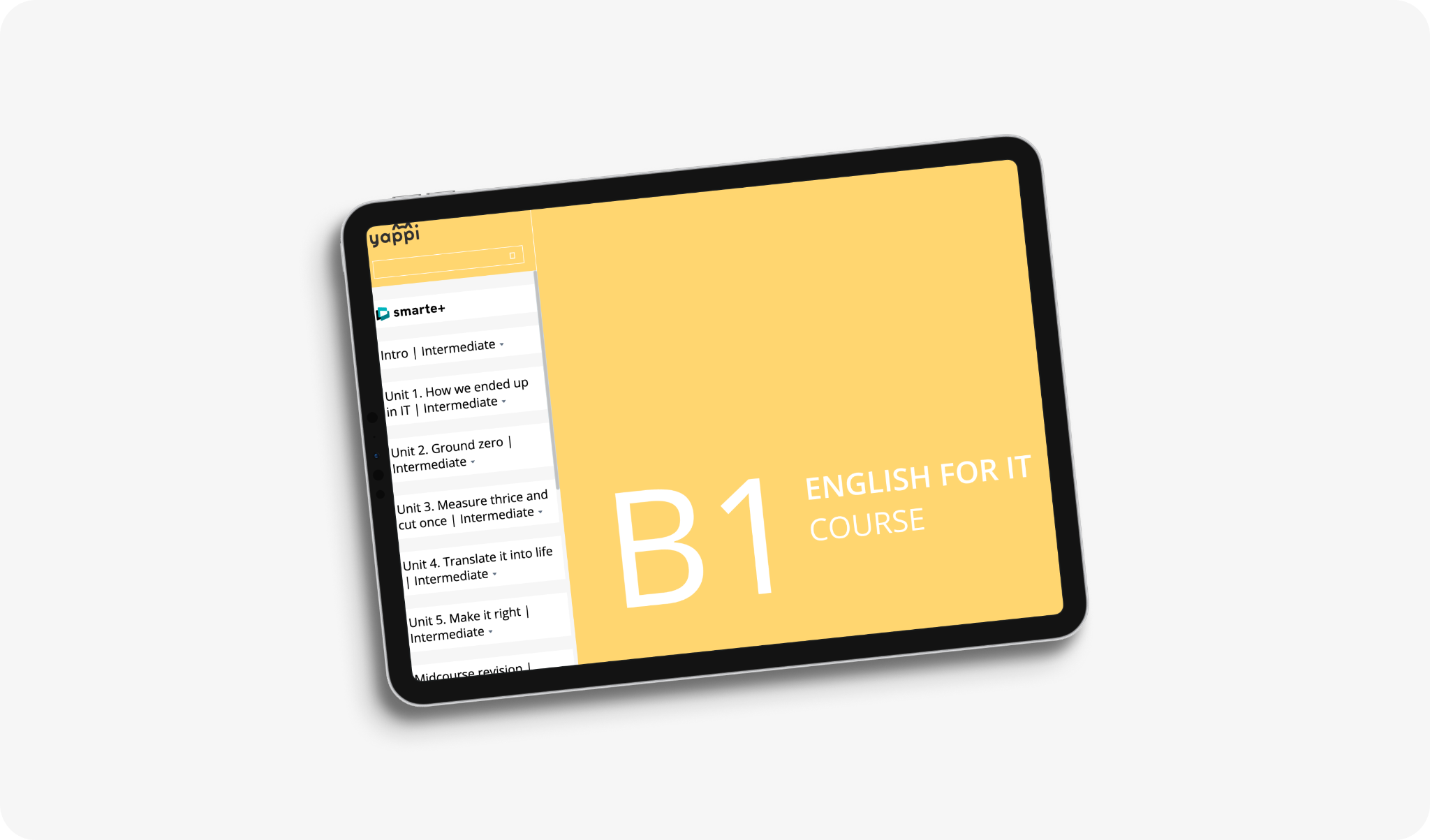
Level: B1–C1 | 10 × 60-min sessions
A course for product managers who lead international teams or work with overseas stakeholders. The programme covers:
Suitable for: product managers, project managers, and business analysts in tech companies.
Level: A2–C1 | 10 × 60-min sessions
A course for system administrators and hosting specialists. The programme covers:
Suitable for: sysadmins, DevOps engineers, hosting specialists, and IT support.
Level: B1–B2 | 10 × 60-min sessions
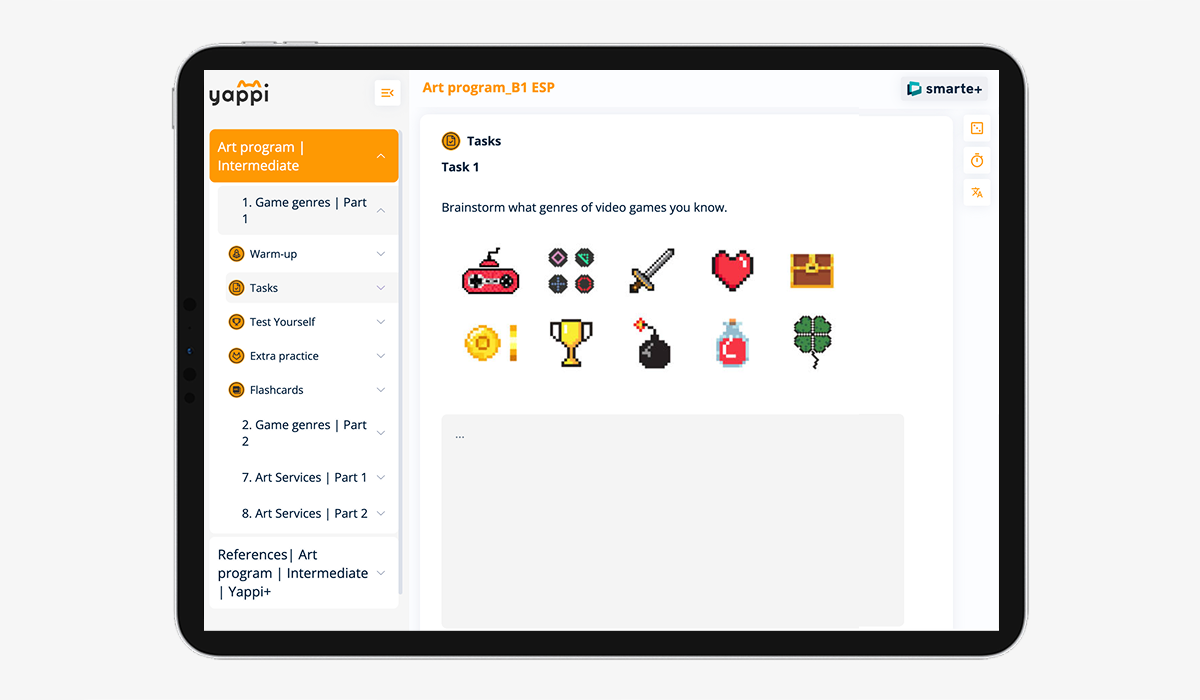
A course for game designers and artists who present their work to international producers and clients. The programme covers:
Suitable for: 2D/3D artists, game designers, and art directors in the games industry.
A high-quality ESP course for IT cannot be built by simply adding a few technical terms to a standard business programme. You need to understand how people actually communicate in a given role: what situations arise, what vocabulary they really use, and where difficulties most commonly occur.
At YAPPI, every ESP programme goes through an in-house R&D team — YAPPI Publishing House. Course methodologists and authors research real-world cases, industry documentation, and typical communication scenarios before writing the first lesson.
For some programmes, the team goes further and brings in practitioners from the relevant field. That's exactly how English for Game Artists was created: a game artist worked alongside the YAPPI authors on the programme for artists in game development, providing feedback on the lesson content — whether the scenarios felt realistic and whether the tasks were appropriate.
As a result, the course covers specific real-world scenarios:
The result is a full range of specialised English courses for the IT industry, where students focus exclusively on what they actually need for their jobs — from the very first session.
From first contact to the start of training, there are just a few simple steps:
ESP courses can be run as a standalone product or added as a specialised module to an existing corporate programme.
Business English covers general professional communication: emails, negotiations, presentations. English for IT is built around specific roles and situations: daily standups, bug reports, code reviews, and stakeholder presentations.
It depends on the programme — levels are listed for each course individually. Most start from A2–B1. Every participant completes a placement test before starting.
Most ESP courses for IT consist of around 10 sessions of 60 minutes each, delivered online. Group or individual format — depending on the company's needs.
Yes — in fact, this is one of the most effective formats. The general course builds the language foundation, while the ESP module adds specialised vocabulary and practice for specific situations.